Where Can You Put a Shipping Container? Planning, Access & Permission Explained
13 May 2026
Adding a shipping container to your property is one of the fastest ways to gain secure, weather-proof space. However, at Secure Stores Nationwide, the most common questions we get aren't about the steel itself, but where that steel can actually sit.
Whether you are looking at shipping containers for sale for a permanent workshop or a short-term container hire for a home renovation or extension, getting the placement right is the difference between a seamless delivery and a logistical headache.
Common Locations: Where Do They Go?
While our roots are in the shipping containers Suffolk market, we deliver across England, Scotland, and Wales. Here is how placement usually works in different environments:
- Driveways & Residential Properties: Most homeowners use containers for furniture storage during a house extension or renovation, or as a hobby room. If it’s going on a driveway, ensure the surface can handle the weight (a 20ft empty container weighs about 2.25 tonnes) and that it doesn't block your neighbour's sightlines. We’ll also need to check access for our delivery vehicle which includes checking for overhead wires.
- Commercial & Industrial Yards: This is the most straightforward placement. Containers are often used for excess stock or as "mini warehouses." In these high traffic areas, container security is usually the priority, so we recommend placing them within the line of sight of existing CCTV. Extra storage capacity may be seasonal, and having stock on hand on site will be far cheaper and more convenient than renting a small building/unit elsewhere. Our minimum chargeable hire duration is 4 weeks, meaning you don’t need to commit to a long term rental period.
- Farms & Rural Land: Farmers have the most flexibility but face the biggest challenges with soft ground. Containers are perfect for placing in "dead zones" of the yard - areas too small for a barn but perfect for a secure tool shed.
Planning Permission: Myths vs. Reality
One of the biggest myths in the industry is that you never need planning permission because a container is considered “portable”. While this is often true, it is not a universal rule. In many cases, shipping containers are treated as temporary structures, similar to a garden shed. If the container is only being used for a short period, such as during a construction project or for temporary storage, planning permission is rarely required.
However, the situation can change if the container is intended to stay in place long term, or if the site is within an Area of Outstanding Natural Beauty, a Conservation Area, or another location with stricter planning controls, which are common in parts of Suffolk. In these cases, the local authority may need to be consulted.
Always have a quick, informal chat with your local planning office. They are usually fine with it, provided the container isn't an eyesore for neighbours or blocking a public right of way.
Access Requirements Explained Simply
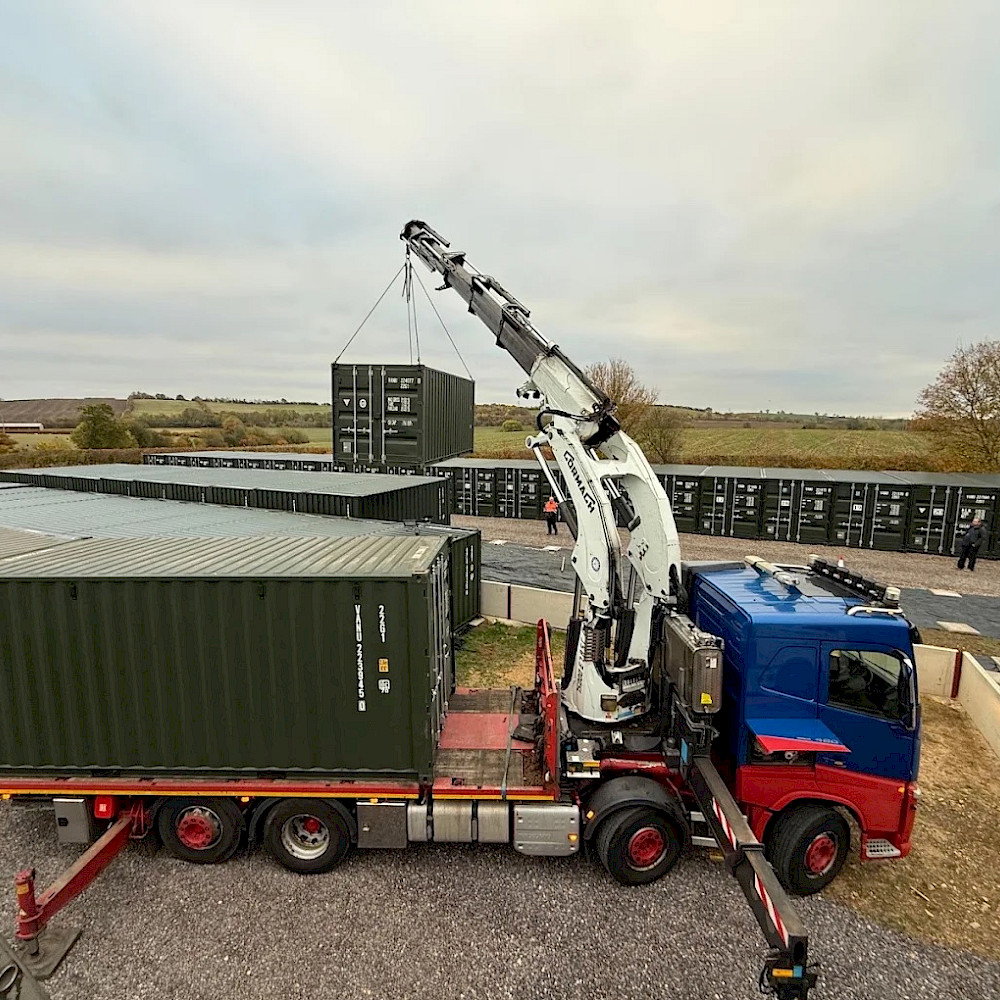
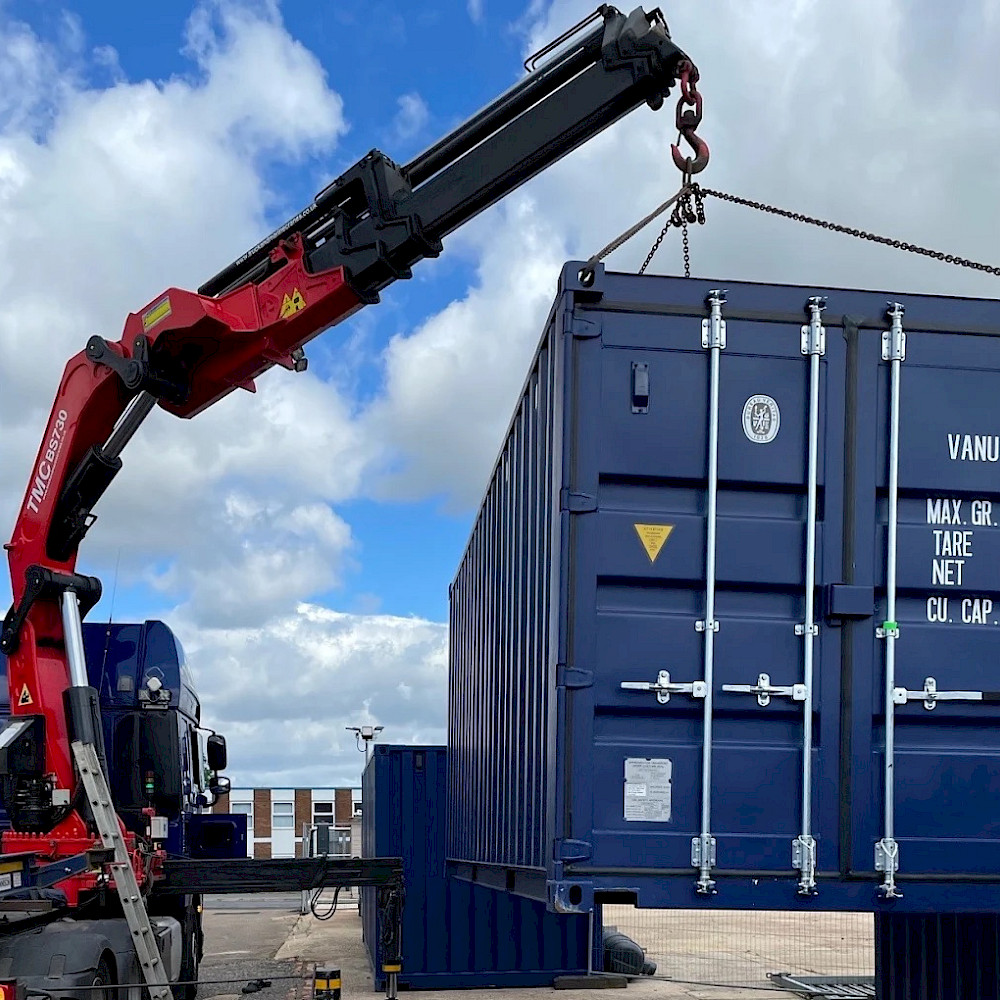
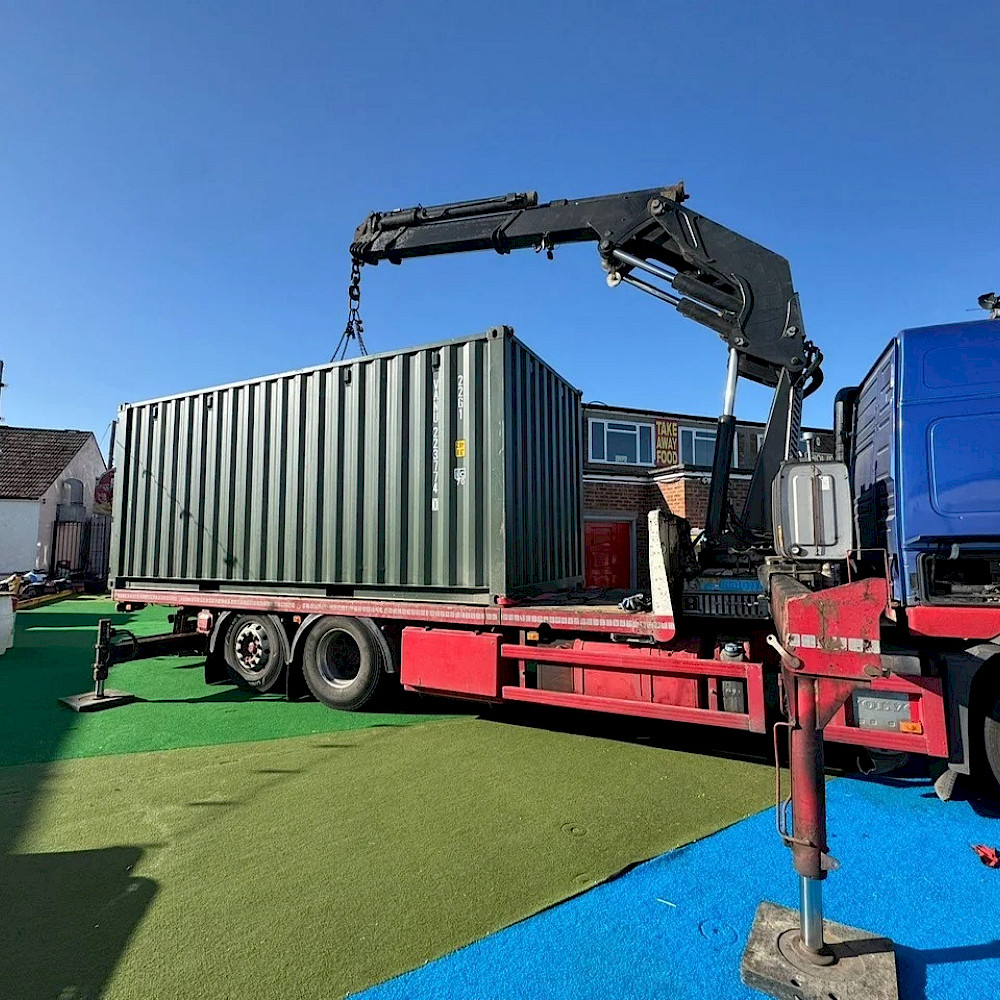
To get shipping containers secure and in place, we use a HIAB lorry (a truck with a built in crane). To ensure a successful delivery, we need:
- Width & Height: The lorry needs a minimum of 10ft width for the vehicle and about 15ft of vertical clearance (watch out for low hanging branches or power lines!).
- The "Reach": The crane extends from the side of the truck usually (though other types of vehicle may be available). We generally need to park parallel to where the container is going.
- The Stabilisers: The truck will deploy "legs" from both sides to stay steady while lifting. These need solid, flat ground to push against.
Ground Preparation Checklist
You don't need a formal foundation, but you shouldn't just drop 2 tonnes of steel onto soft mud. To keep your shipping containers secure and level, follow this checklist:
- Level it: If the container isn't level, the doors will "rack" and become very difficult to open and close.
- The Four Corners: You don't need a full concrete pad. Many customers use concrete paving slabs or railway sleepers under the four corners to keep the unit off the damp ground. Only the four corners touch the ground, and containers are self supporting.
- Airflow: Ensure there is a small gap underneath to prevent moisture buildup and rust over the long term.
- Drainage: Avoid placing the unit in a "hollow" where rainwater pools during a classic Suffolk downpour.
Ready to Secure Your Space?
Whether you are browsing shipping containers for sale to create a permanent farm workshop or need a short term container hire for a commercial project, Secure Stores is here to help.
As a Suffolk based team, we know the local landscape and can advise you on the best spot for your unit to ensure container security and longevity.