Common Shipping Container Mistakes (And How to Avoid Them Before You Order)
27 May 2026
Buying or hiring a shipping container seems straightforward - you pick a box, and it arrives on a truck, right? Well, not exactly. At Secure Stores, we’ve helped thousands of customers across the UK, but we’ve also seen where things can go wrong when the prep work is skipped.
If you’re looking for shipping containers for sale or considering a short term container hire, avoiding these four common pitfalls will save you time, money, and a fair bit of stress.
1. Choosing the Wrong Size
The "Goldilocks" rule applies here: you don't want a container that's too small to fit your gear, but you also don't want to pay for 40ft of steel when 20ft would do.
- The Mistake: Forgetting to account for "manoeuvring room" inside. If you fill a 20ft container to the brim, you can’t reach the items at the back without unloading the whole thing.
- The Fix: If you have high volume but light goods, consider a High Cube container for extra vertical space. If you need frequent access to everything, two 20ft units might be better than one 40ft unit. Additionally, with smaller sizes (8ft and 10ft), there is usually very little difference in price between these and a 20ft (because of the cost price of the smaller ones), and transport is the same as a 20ft.
2. Not Preparing the Ground
A shipping container is incredibly strong, but it isn't flexible.
- The Mistake: Dropping a container directly onto soft Suffolk mud or an uneven patch of grass. Over time, the heavy end (the doors) will sink slightly. If the unit isn't perfectly level, the doors will "rack," becoming nearly impossible to open or close.
- The Fix: Ensure the four corners are supported by concrete pads, paving slabs, or railway sleepers. This keeps the unit level and allows airflow underneath to prevent base rust.
3. Underestimating Delivery Access
This is the most common "day of" disaster.
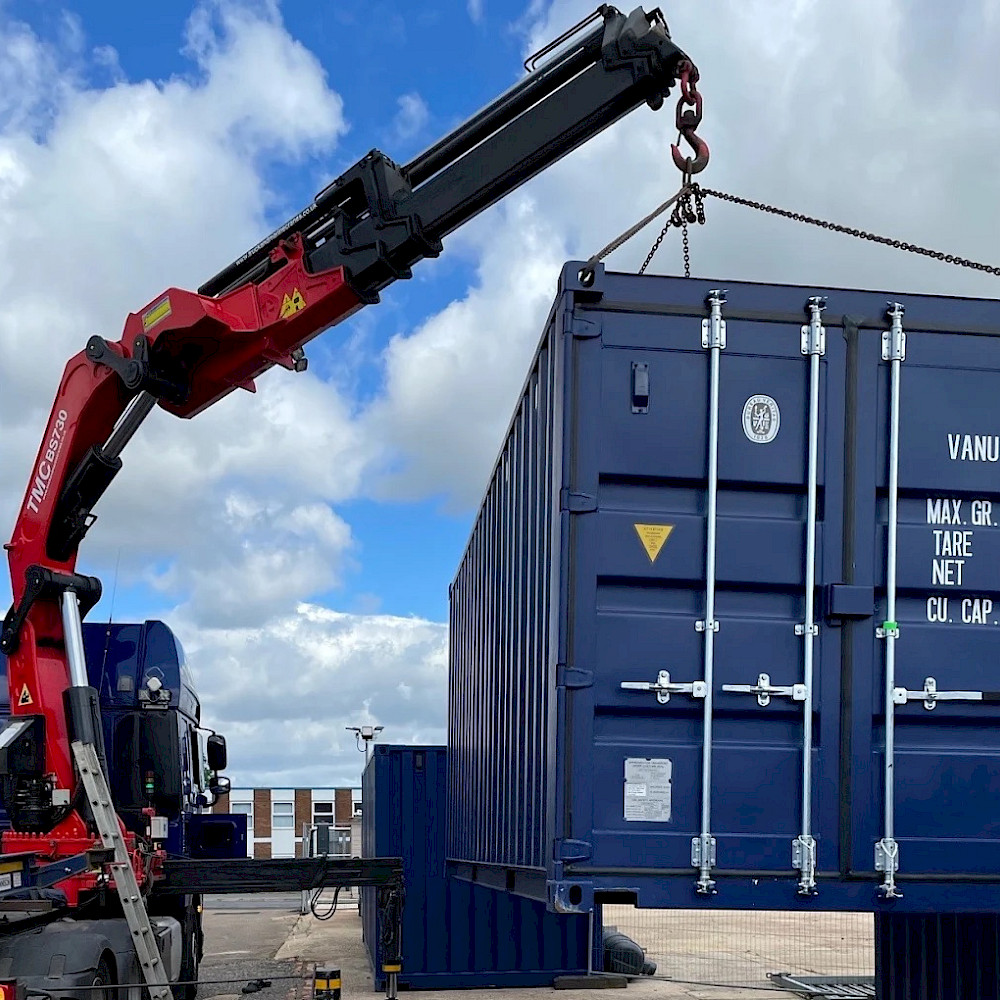
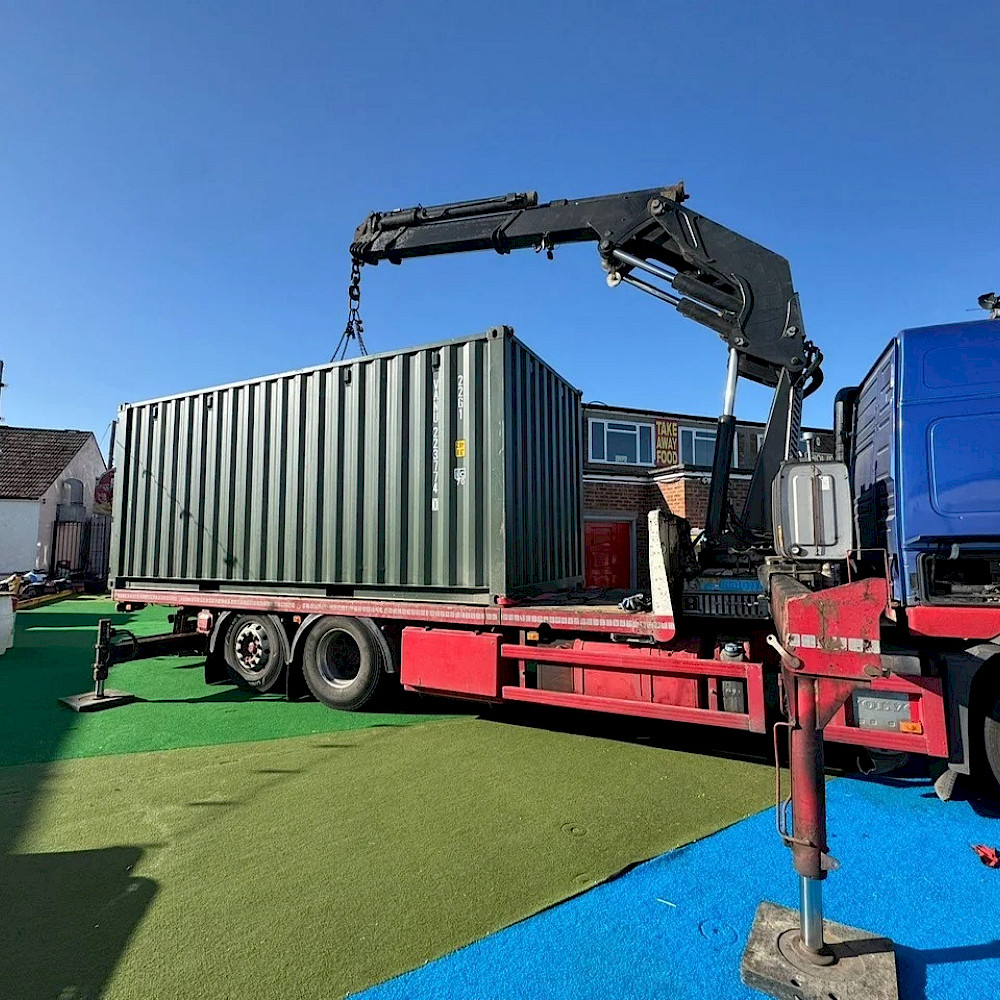
- The Mistake: Assuming a standard lorry can reach your spot. Delivery trucks are huge, heavy, and use cranes (HIABs) that need extra width to deploy their "stabiliser legs."
- The Fix: Check for low hanging branches, overhead power or phone lines, and tight gate turns. If a car can barely fit through the gap, a 26 tonne HIAB lorry definitely won't! We always recommend sending us photos of the delivery route beforehand. We can usually quickly tell what’s possible, and if we aren’t sure, a site survey can be arranged.
4. Buying When Hire Would Be Better
We love supplying shipping containers across Suffolk, but sometimes buying isn’t the best financial move.
- The Mistake: Buying a unit for a six month project, then being stuck with the hassle of trying to sell and transport it away afterward.
- The Fix: If your need is temporary (under 24 months), container hire is usually the winner. It preserves your capital, and we simply whisk the container away when you’re done. Container prices also rise and fall, so you can’t be sure that you will definitely get close to what you paid originally for the container if the container price has dipped at the time you need to re sell it.
If hire sounds like the right fit, we currently have 20ft units ready for immediate delivery, browse our available hire stock here.
How Secure Stores Helps You Get It Right
As a Suffolk-based business with a national reach, we don't just "drop and dash." We act as your project partners to ensure your shipping containers secure your goods without a hitch. We ask the right questions about your site and usage before you spend a penny.
We can provide clear dimensions and access requirements so there are no surprises on delivery day. We even have a YouTube video showing a container delivery and talking you through what needs to be considered: https://www.youtube.com/watch?v=XPgY5HMmPEI
Because we offer both shipping containers for sale and hire, we’ll give you an honest opinion on which is more cost-effective for your specific timeline.
Quick “Before You Order” Checklist
Run through this list before you hit the "order" button:
- Tape Measure Test: Have you physically marked out the 8ft width and 20ft/40ft length on your ground?
- The Door Swing: Is there enough room in front of the unit for the heavy doors to swing open 270 degrees?
- Surface Check: Is the ground firm enough to support a 20+ tonne delivery truck without it getting stuck?
- Utility Check: Are there any low power lines or phone cables the crane might hit?
- Permission: Have you double checked if you need a quick "okay" from the council?