Your 2026 Guide to Buying Shipping Containers: New vs Used
28 January 2026
Choosing between a new or used shipping container becomes much easier when you understand the key differences. While both options provide strong, weatherproof storage, factors such as lifespan, condition, security and price all play an important role in deciding which option is right for your needs.
This guide breaks down the core pros and cons, explaining how delivery considerations affect the overall process, and highlight the essential checks to make before buying the right container with no guesswork.
Key Differences Explained Simply: The Pros and Cons of Each
When choosing between a new or used shipping container, many customers want a clear and straightforward explanation of what really matters. Both options offer secure and durable storage, but differences in condition, lifespan, appearance and cost can influence which choice best suits your project.
Understanding these factors makes it easier to decide whether a new container is essential, or if a used container will do the job just as effectively.
Lifespan
New containers naturally offer the longest lifespan because they have only made a single trip from the factory in China. With minimal wear, and very limited exposure to harsh conditions they can provide 30+ years of reliable use.
Used containers however, still offer excellent durability but may show signs of ageing depending on previous handling and environment. The lifespan of these is generally nearer 10 years.
Condition
The biggest visible difference to customers is condition.
- New containers look fresh, clean and modern which makes them ideal for customer facing environments such as self storage sites, or outside your premises for storage of stock. New containers also tend to be better ventilated, as we design them for static storage – this helps with condensation prevention.
- Used containers will have some cosmetic wear such as scratches, dents and surface rust. but they do still remain structurally sound and fully weatherproof.
Security
Both our new and used containers are built from steel and all containers can come fitted with a lock box (new have them as standard, and they can be welded on to second hand one). Padlocks can be an additional accessory if needed. The security on each type is the same with a lock box and high security padlock.
Price differences
Costs vary, but the pattern is simple …
- New containers are the pricier option, better suited for professional presentation or long term investment.
- Used containers are a more budget friendly option, offering excellent value for businesses that prioritise function over appearance.
Another factor that comes into play is when to choose a new container or a used container.
Choosing new is often the best option for:
- Events, hospitality and festivals
- Client facing business environments
- Pop up units
- Self storage sites
- Storing hygiene sensitive or high value items
- Items which are at risk of damage from condensation
Used containers are ideal for:
- Construction sites
- General business or household storage
- Farming and agricultural use
- Tools and machinery
The right choice depends on what you value the most. Whether you want a new container for its premium and professional look or a used container for its cost effective storage for everyday use, there will be a container suitable for you.
By considering your container needs you can confidently choose the option that provides the best balance of performance and value. Just ask us for some sample photos if you need help choosing.
Delivery Considerations
Before hiring or buying a shipping container, it’s important to understand the key delivery considerations that can affect cost, timing and how smoothly your installation will go. Factors such as distance, access and site preparation, as well as local availability all play a major role in ensuring your container arrives safely and exactly where you need it.
Why distance matters
Delivery distance directly impacts both costs and lead time. The further a container has to travel, the higher the transport fee and the greater chance of delays. Hiring locally (Suffolk) keeps delivery routes short, reduces transport costs and allows for quicker turnaround times.
Choosing a supplier close to home is one of the easiest ways to save money and avoid unnecessary waiting times. Whilst we have nationwide coverage, we can be especially efficient in Suffolk – be it Ipswich, Bury St Edmunds, Felixstowe, Woodbridge, Lowestoft of anywhere else, we can deliver quickly and cost effectively.
A smooth delivery depends on proper access. Containers are delivered using HIAB trucks, which need enough space to reverse, lift and lower your unit safely. As a customer you should check for:
- A firm, level ground where the container will sit (delivery containers on grass is best suited for summer)
- Overhead cables
- Underground cables or pipes
- Overhanging trees
- Clear wide entry routes
Alternatively, we can help with this if you can provide access photos/videos.
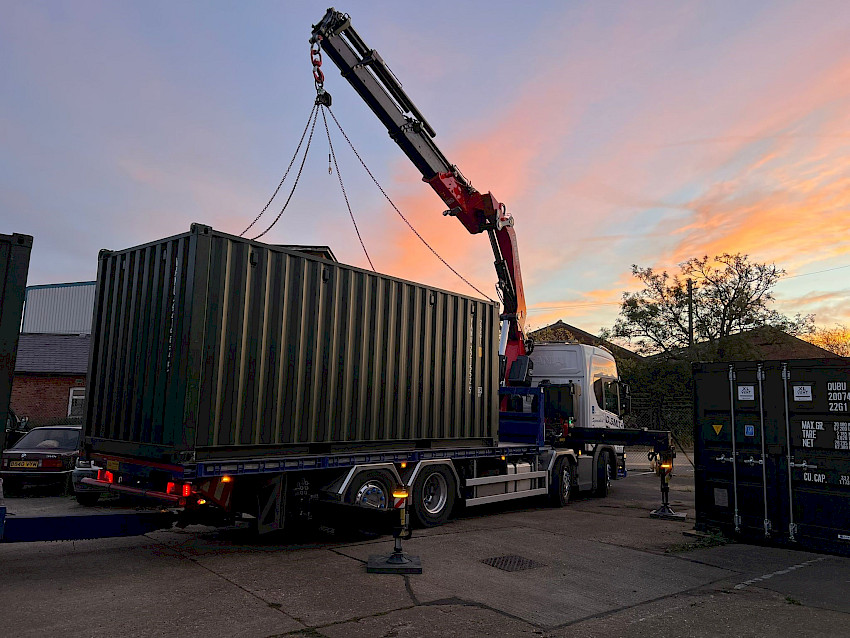
You can watch a sample delivery take place here: https://www.youtube.com/watch?v=XPgY5HMmPEI
Understanding delivery considerations helps to ensure your container arrives quickly, safely and without complications. By choosing a local provider and preparing your site in advance, you can enjoy faster delivery times, lower transport and an overall stress free delivery process.
Buying Checklist Examples
When purchasing a shipping container, new or used, it’s important to know exactly what to look for. A few simple checks can help you to avoid unexpected issues and ensure it is suitable for your storage needs. A clear buying checklist gives you confidence before you commit.
- Ask for photos: You can always ask for photos of the container you’re purchasing. In Suffolk, we can generally provide internal and external images which will help you to confirm the condition and spot any imperfections to ensure the container is up to your expectations before it arrives.
- Look for damaged floors: Heavy use in second hand units can lead to patches of wear or damage. If you need a container for storing tools, machinery or heavy stock an intact floor is essential for stability and long term durability.
- Ask the age of the container: A new one trip container should have been manufactured in the last 12 months, and a second hand ex seagoing container should usually be approx.. 15 years old when it’s retired and sold on for storage.
- Check the roof: If you are purchasing a second hand unit, a roof free from dents will have a longer lifespan – you will be able to see any dents from inside the container.
- Door seals: Ensure second hand options have good door seals.
- Arrange a viewing: In Suffolk, we can easily arrange viewings of equipment in our Felixstowe depot.